
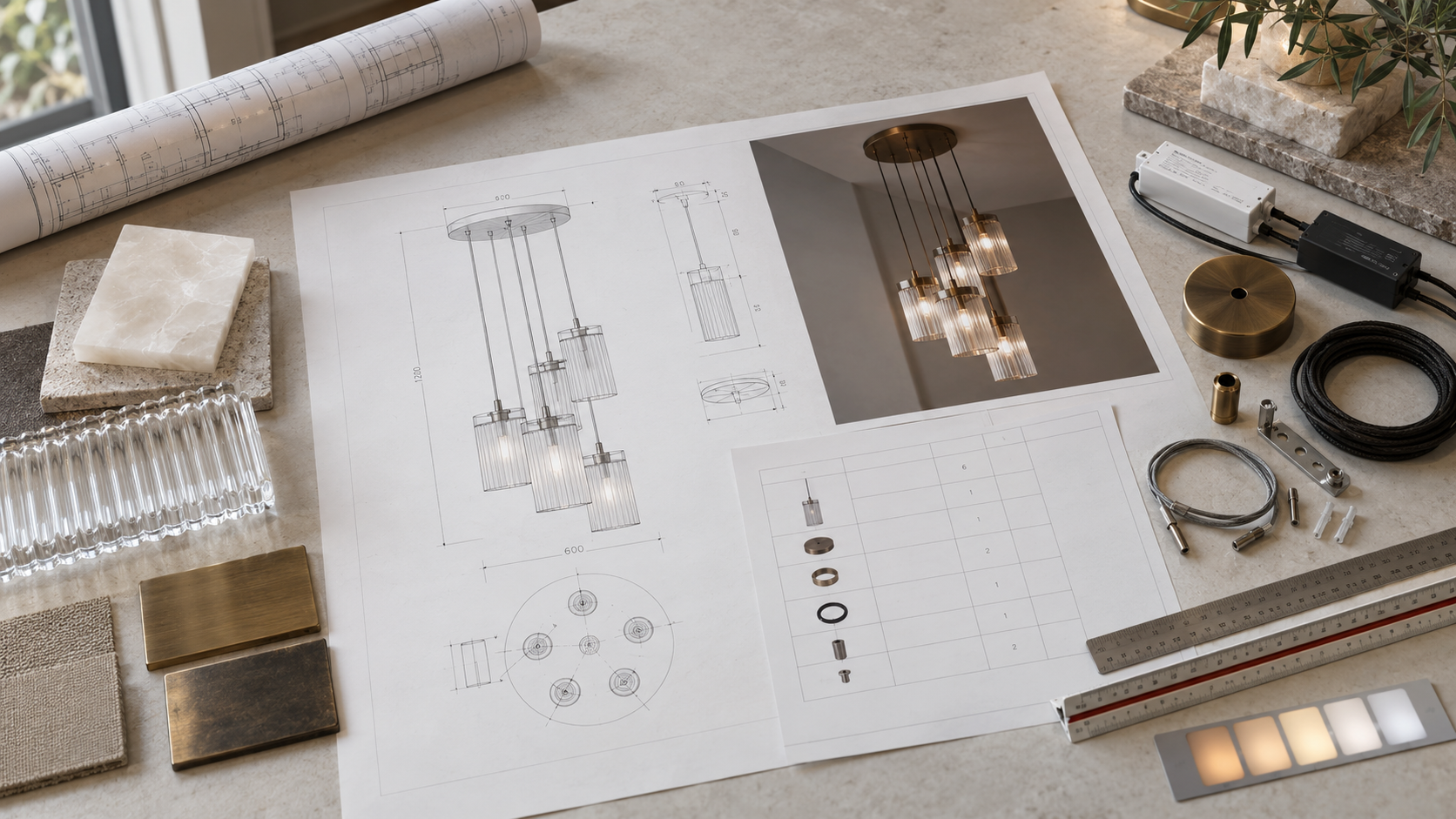
A bespoke lighting enquiry may begin with a detailed drawing, a rendering, a reference photograph or simply an initial design idea.
It is not always necessary to have a complete technical package before contacting a manufacturer. However, the quality of the available information directly affects the accuracy of the quotation.
A reference image may communicate the intended appearance, but it does not confirm the size, construction, materials, light source or installation method. When these details are missing, a quotation may need to rely on assumptions that could change later.
Providing the right information at the beginning allows the manufacturer to understand the design, identify technical questions and prepare a more reliable proposal.
1. Reference Images or Design Drawings
The first requirement is a clear visual reference showing what needs to be produced.
This may include:
- A hand sketch
- A reference photograph
- An interior rendering
- A PDF drawing
- A CAD drawing
- A 3D model
- A lighting schedule
- A specification sheet
The information does not need to be presented in a particular format at the initial enquiry stage. A clear image and basic dimensions may be enough to begin a preliminary review.
However, it is important to explain whether the image represents:
- The exact design to be manufactured
- A general style reference
- A finish reference
- A shape or proportion reference
- An existing product that needs to be adapted
This helps the manufacturer understand which details should remain unchanged and which can be developed.
2. Overall Dimensions
The overall size of the fixture is one of the most important factors in a bespoke lighting quotation.
Depending on the product, useful dimensions may include:
- Diameter
- Width
- Length
- Body height
- Overall height
- Overall drop
- Projection from the wall
- Ceiling plate dimensions
- Backplate dimensions
- Suspension length
A decorative pendant measuring 400 mm in diameter will require a different amount of material and a different internal structure from a chandelier measuring 2,000 mm in diameter, even if the visual concept is similar.
For suspended lighting, it is helpful to distinguish between the height of the fixture body and the total suspension height.
Where dimensions have not yet been finalised, an approximate size range can still support an initial review. The quotation should then clearly state which dimensions have been assumed.
3. Quantity
Quantity affects more than the total price.
It can influence:
- Material purchasing
- Component sourcing
- Tooling or mould costs
- Production methods
- Sample requirements
- Unit pricing
- Packaging
- Production time
A one-off decorative fixture may require the same technical development as a larger quantity, but the development cost is distributed differently.
If the project includes several sizes or variations of the same design, provide the quantity for each version separately.
For example:
- 20 wall lights
- 8 table lamps
- 4 large pendants
- 12 small pendants
This is more useful than providing only the combined project quantity.
4. Materials
If the intended material is known, it should be included with the enquiry.
Typical decorative lighting materials may include:
- Brass
- Stainless steel
- Steel
- Aluminium
- Glass
- Resin
- Fabric
- Timber
- Stone or stone-effect materials
The visible appearance alone may not confirm the correct base material.
A brass-coloured component, for example, could be manufactured from solid brass, stainless steel with a plated finish, aluminium or another suitable material. These options can differ significantly in weight, construction, appearance and cost.
If the material is not fixed, explain the required visual result and ask the manufacturer to recommend a suitable option.
5. Finish Requirements
Finish descriptions should be as specific as possible.
Examples include:
- Brushed brass
- Antique brass
- Satin nickel
- Brushed bronze
- Polished chrome
- Matt black
- Powder-coated finish
- Painted RAL colour
A written finish name can still be interpreted differently by different suppliers. Where appearance is important, it is useful to provide:
- A finish sample
- A physical reference
- A clear photograph
- A RAL code
- An approved finish from a previous order
The final finish should normally be confirmed by an approved sample rather than relying only on a screen image.
Natural variation may also need to be considered when working with hand-applied finishes, timber, stone, handmade glass or other materials with individual characteristics.
6. Light Source
The quotation should identify the preferred light source where possible.
This may include:
- Replaceable E14 or E27 lamps
- G9 or G4 lamps
- Integrated LED modules
- LED strips
- COB LED
- Decorative filament lamps
The choice of light source affects the internal construction, heat management, diffuser position, maintenance access and electrical components.
For integrated LED products, useful information includes:
- Required wattage
- Colour temperature
- Lumen output
- Colour rendering requirement
- Beam angle, where relevant
- Replaceability or access requirement
If these details have not yet been confirmed, the manufacturer can review the fixture and propose a suitable starting point.
7. Colour Temperature
Colour temperature has a significant effect on the appearance of decorative lighting.
Common requirements include:
- 2200K
- 2400K
- 2700K
- 3000K
- 4000K
For hospitality interiors, warmer colour temperatures are often selected, but the correct choice depends on the interior concept and lighting specification.
The same colour temperature should ideally be coordinated across the project, particularly when bespoke fixtures are installed close to architectural lighting.
8. Dimming and Control
Dimming requirements should be confirmed before the electrical design is finalised.
Possible control methods include:
- Non-dimmable
- Phase dimming
- TRIAC dimming
- 0–10V or 1–10V
- DALI
- DALI-2
- Push dimming
- A project-specific control system
The control method affects the driver specification, internal space and wiring arrangement.
A driver selected for one dimming system may not be suitable for another. Changing the dimming requirement after production has started can therefore affect cost, construction and delivery time.
If the project uses DALI or another control system, it is also useful to clarify whether the driver will be installed inside the fixture, inside the ceiling plate or remotely.
9. Voltage and Project Location
The project location helps the manufacturer understand the electrical and installation requirements.
Useful information includes:
- Destination country
- Input voltage
- Frequency
- Plug type for portable fixtures
- Applicable project requirements
- Indoor or outdoor use
A table lamp intended for the UK may require a different plug and cable arrangement from one intended for Europe or the United States.
The project location may also affect packaging, documentation, transportation and delivery planning.
Any required testing, documentation or compliance standard should be identified during the quotation stage rather than assumed.
10. Installation Conditions
A lighting fixture cannot be reviewed independently from the surface or structure supporting it.
For ceiling-mounted products, useful information may include:
- Ceiling type
- Ceiling void depth
- Fixing surface
- Suspension height
- Available cable entry
- Driver location
- Access above the ceiling
- Maximum permitted weight
- Number of available fixing points
For wall lights, useful information may include:
- Wall construction
- Recess depth
- Electrical box position
- Cable entry point
- Backplate limitations
- Surface-mounted or recessed installation
For large chandeliers, the manufacturer may also need information about ceiling access, lifting, on-site assembly and structural support.
If the final site condition is not yet available, this should be identified as an item requiring confirmation.
11. Required IP Rating
The required IP rating depends on where the fixture will be installed.
A decorative light used in a dry interior may have different construction requirements from a fixture used in a bathroom, sheltered exterior or fully exposed outdoor location.
If an IP rating is required, provide:
- The required rating
- The intended location
- Whether the fixture is exposed to direct water
- Any project-specific testing requirement
It is better to provide the installation condition rather than requesting an IP rating based only on appearance.
12. Programme and Delivery Requirements
The required delivery date should be shared as early as possible.
A bespoke lighting programme may include:
- Design review
- Initial quotation
- Production shop drawings
- Finish or material samples
- Prototype development
- Sample approval
- Material purchasing
- Production
- Quality inspection
- Packaging
- Transportation
The production time should not be considered separately from drawing approval, sampling and shipping.
If the project has a fixed installation date, the quotation request should include both the required delivery date and the destination.
This allows the manufacturer to assess whether the programme is realistic before the order proceeds.
13. Packaging and Shipping
Large, fragile or complex fixtures may require specially designed packaging.
The manufacturer may need to consider:
- Wooden cases
- Protective foam
- Separate packaging for glass
- Modular construction
- On-site assembly
- Maximum carton dimensions
- Air freight or sea freight limitations
Packaging can influence how the fixture is divided into sections and assembled on site.
For very large lighting installations, transportation should therefore be considered during product development rather than after production is complete.
What If Some Information Is Missing?
It is normal for some details to remain unresolved during the first enquiry.
A manufacturer can still review the available information and identify what needs to be confirmed before a firm quotation is issued.
Where assumptions are necessary, they should be stated clearly.
For example:
- Quotation based on the dimensions shown in the reference drawing
- Finish based on brushed brass, subject to sample approval
- Non-dimmable driver assumed
- Standard suspension length assumed
- Installation hardware excluded pending ceiling details
This allows the project to move forward without presenting estimates as confirmed specifications.
A preliminary quotation can be useful during budgeting, but the price may need to be revised once the final dimensions, materials and electrical requirements are approved.
A Practical Enquiry Checklist
Before submitting a bespoke lighting enquiry, provide as much of the following information as possible:
- Reference image or drawing
- Overall dimensions
- Quantity for each design
- Preferred material
- Finish requirement
- Light source
- Colour temperature
- Dimming or control method
- Voltage
- Project location
- Installation condition
- Required IP rating
- Required delivery date
- Relevant project documents
The enquiry does not need to be perfect. What matters is that confirmed information, provisional information and open questions are clearly distinguished.